

Each cacao carries a territory, a people, and a living relationship with the land. Choose where to begin.
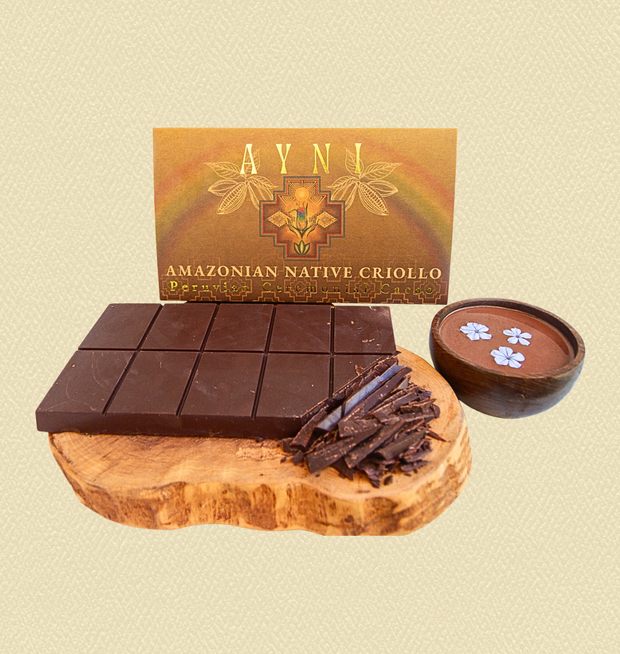
Amazonian Native Criollo
Cacao of the Unconquered Amazon
The Awajún are one of the Amazon's great warrior nations — defenders of the rivers, mountains, and forests of northern Peru. They resisted Inca expansion and never submitted to Spanish conquest. Their cacao grows beneath dense native canopy, accessible only by river, processed entirely within community territory.
Bold and full-bodied — deep cacao, roasted nuts, dried fruit, humid earth, long fruit finish.
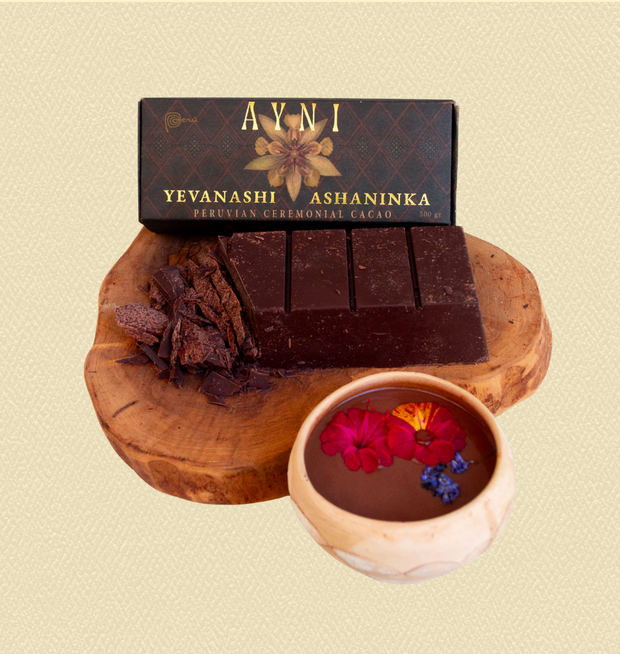
Qori Inti · Chuncho
Guardians of Ancient Amazonian Cacao
The Asháninka and Matsigenka cultivate cacao within traditional agroforestry beneath dense canopy. Their cacao blends native genetics with selected local clones such as Qori Inti — "Golden Sun" — alongside ancient Chuncho populations regarded as part of the original cradle of cacao genetic diversity on Earth.
Floral cacao · tropical fruit · forest honey · soft earth · elegant acidity · long wild-forest finish.
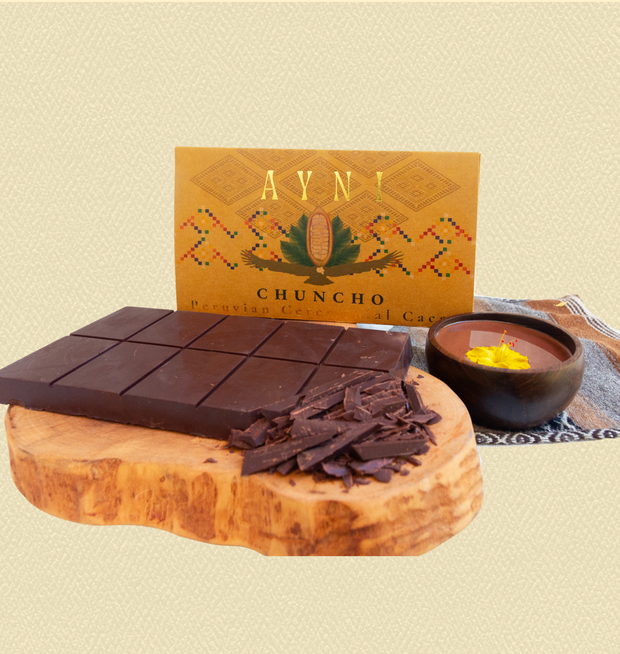
High-Altitude Chuncho
Ancient Cacao of the Andes–Amazon
Cultivated in Quillabamba and Chungui beneath the Vilcanota glacier, its character is shaped by cold mountain waters, humid cloud forests, mineral-rich soils, and Andean winds. Quechua farming families continue cultivating these ancient populations at unusually high elevations, giving Chuncho its extraordinary aromatic complexity and naturally low bitterness.
White flowers · tropical fruit · honey · bright floral acidity · long elegant finish.
Most products labelled "cacao" in the global market are not the same plant we offer. Here's how it actually breaks down.
The rest is industrial hybrid, monoculture, often grown on recently cleared land — a system long documented for forced and child labour. Native cacao is the opposite story: biodiverse, slow, community-held, ecologically generative.
Choosing it is not symbolic. It is a structural choice about which cacao world you want to keep alive.
Touch a pin to meet each nation. Their cacao, their lands, their living relationships.