

The communities we work alongside are living cultures, carrying generations of ancestral knowledge. Their relationship to the land is not extractive — it is regenerative: integrating production, culture and spirituality into a single way of being. They are not the beneficiaries of our work. They are its origin, and its core actors.
Across the five nations below, we build long-term partnerships rooted in territorial sovereignty, premium pricing, and shared decision-making about what is grown, how, and for whom.
One of the largest indigenous nations in the Peruvian Amazon. Renowned warriors, river travelers, and defenders of communal title — they have successfully resisted external invasion for centuries. Our deepest partnership: vast forest territory of forest at Valle Escondido are under Awajún stewardship.
Linguistic and historical cousins of the Awajún, the Wampis declared the first Autonomous Territorial Government of an indigenous nation in Peru in 2015 — a profound act of self-determination over an ancestral territory of more than one million hectares.
The largest indigenous nation of the Peruvian Amazon. Holders of an extraordinary knowledge of plants, with deep tradition in cacao, coca, and forest medicine. Long-time defenders of the central Amazon against colonisation, narco-trafficking and timber extraction.
People of the Urubamba river basin, neighbours and relatives of the Asháninka. Custodians of vast tracts of Manu and Megantoni biosphere reserves — and of an oral cosmology built around the spirit and intelligence of the forest.
The largest indigenous nation of the Andes — descendants of the civilisation that gave us the word ayni itself. Stewards of high-altitude agriculture, weavers of the cloths we carry forward (textiles), keepers of the cosmovision of sumaq kawsay, the good life.
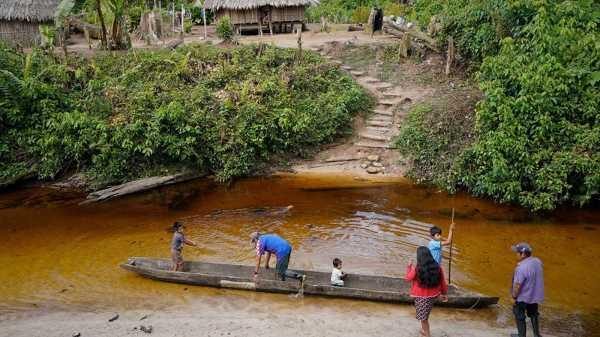
Over 80% of Valle Escondido is legally held by five Awajún communities. We collaborate primarily with the two largest entities — Mantaga and Achu — who together safeguard a contiguous expanse of forest.
These families have successfully thwarted the incursion of invaders from the Alto Mayo migration corridor, a region that has seen significant deforestation in recent decades. Where their territory ends, the chainsaws often begin.
The valley remains pristine today — but the pressure persists. Strengthening the economy of these communities is essential to ensuring they continue as guardians of the forest, and to averting land leases that could end in further deforestation.
Many of the families we work with in the Andean foothills are of Andean origin — Quechua migrants who came to this region in search of better opportunities and found in regenerative agriculture not just a livelihood, but a pathway to well-being for their children.
Where extensive monoculture once dominated, specialised agroforestry now grows: shade-grown coffee, native cacao, vanilla, native fruits. The same families who once farmed at the margins now anchor specialty value chains that reach Lisbon, Portland, and Berlin.
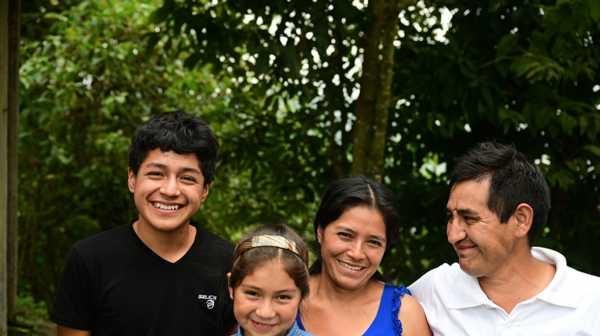
Their relationship with land is not extractive. It is regenerative.
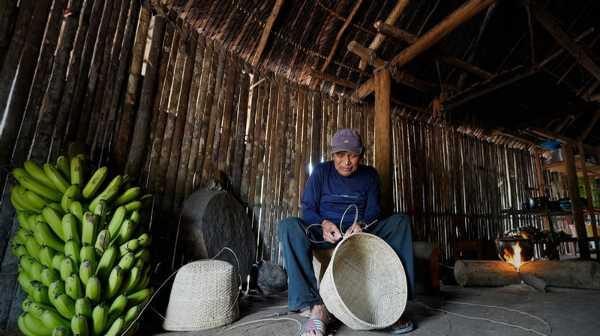
Ancestral knowledge does not survive in archives. It survives in hands that practice it — in the weaver who has made a hundred baskets, in the cacao farmer who reads the colour of the bean, in the elder who knows which leaf eases which fever.
Every Ayni partnership is designed to keep that knowledge in living circulation: paying premiums that make it viable to keep practicing, sharing infrastructure that respects traditional methods, and protecting the territory in which all of it makes sense.